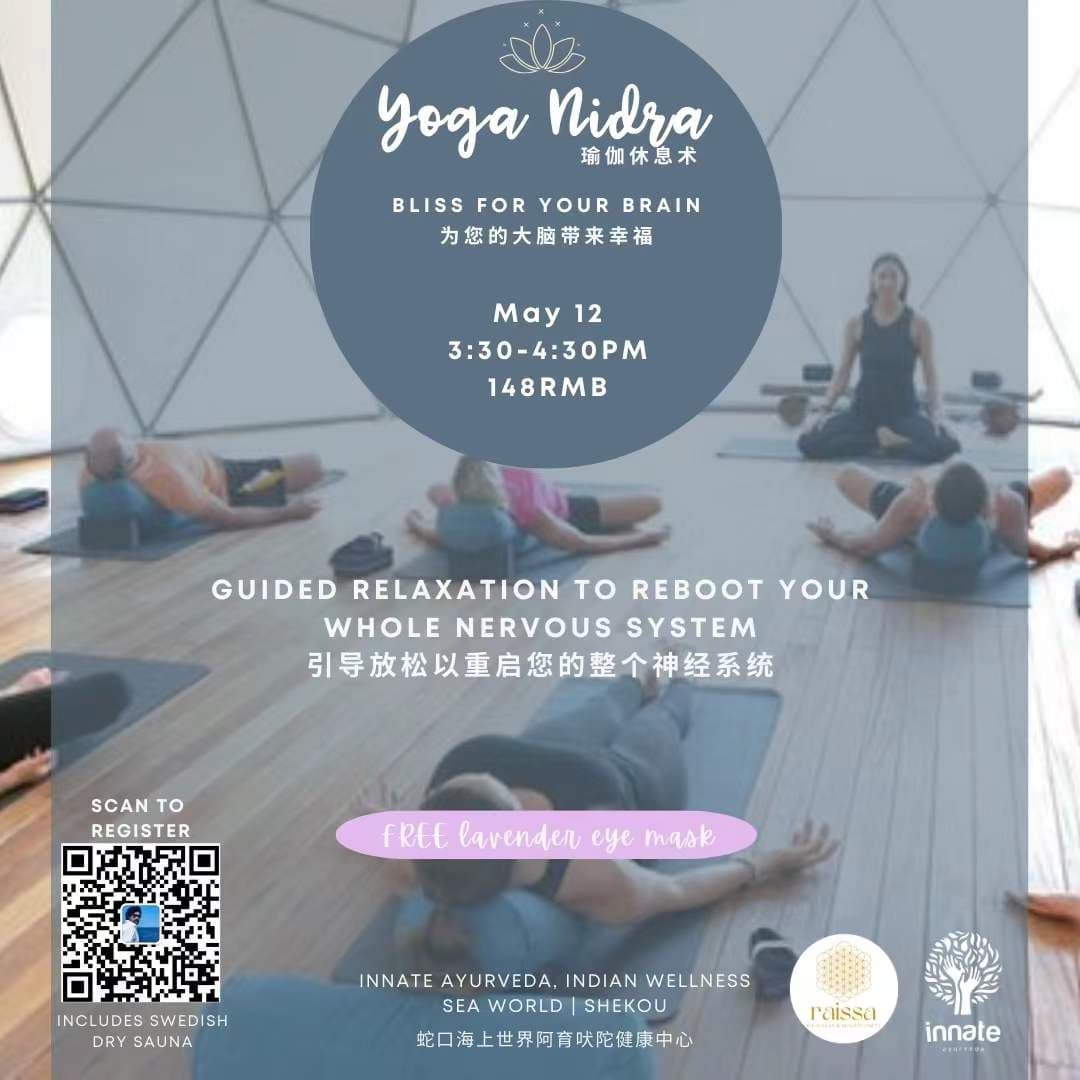
Yoga Nidra
The yoga of sleep, and the neuroscience of deep rest. Guided NSDR for genuine restoration.
Overview
Yoga Nidra, translated as yogic sleep, is a guided practice that brings the body and mind to the threshold between waking and sleep. It is one of the most powerful tools available for nervous system restoration, emotional processing, and genuine cognitive recovery. You may also know it by its modern name: Non-Sleep Deep Rest, or NSDR.
NSDR is the term popularized by Dr. Andrew Huberman, neuroscientist and professor at Stanford University School of Medicine, for practices that place the brain and body into deep rest without full sleep.
A study published in Cognitive Brain Research found that Yoga Nidra meditation significantly increased endogenous dopamine release in the striatum by 65%, the brain region tied to motivation, reward, and the ability to initiate action (Kjaer et al., 2002).

Is this for me?
Who it's for
Yoga nidra is for everyone — particularly those who struggle with sleep, burnout, exhaustion, or an overactive mind. If you find sitting meditation difficult, yoga nidra may be the most natural entry point, because it asks nothing of you except to lie down and listen.
What you'll gain
Benefits
Profound rest and restoration
Improves sleep quality
Reduces burnout and exhaustion
Calms an overactive mind
Accessible to everyone — no flexibility needed
Preparation
What to expect
You will lie down on a comfortable mat with blankets and an eye mask. The facilitator will guide you through body scanning, breath awareness, visualization, and a personal intention (sankalpa). Sessions typically last 45 to 60 minutes.
Wear warm, comfortable clothing. Bring socks — your body temperature drops during deep rest.
Memories
Past Yoga Nidra events
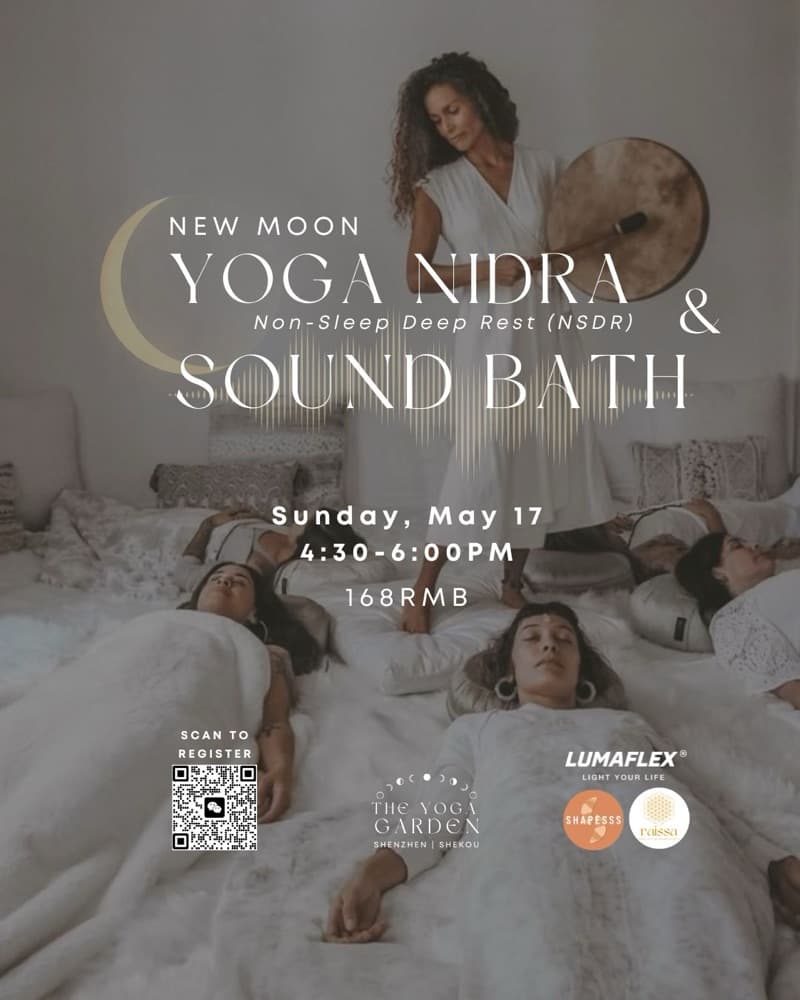
May 1812:30 AM
Yoga Nidra & Sound Bath
Non-Sleep Deep Rest (NSDR) and sound healing under the new moon. Guided yogic sleep for genuine restoration, deepened by LUMAFLEX Red Light Therapy.
The Garden
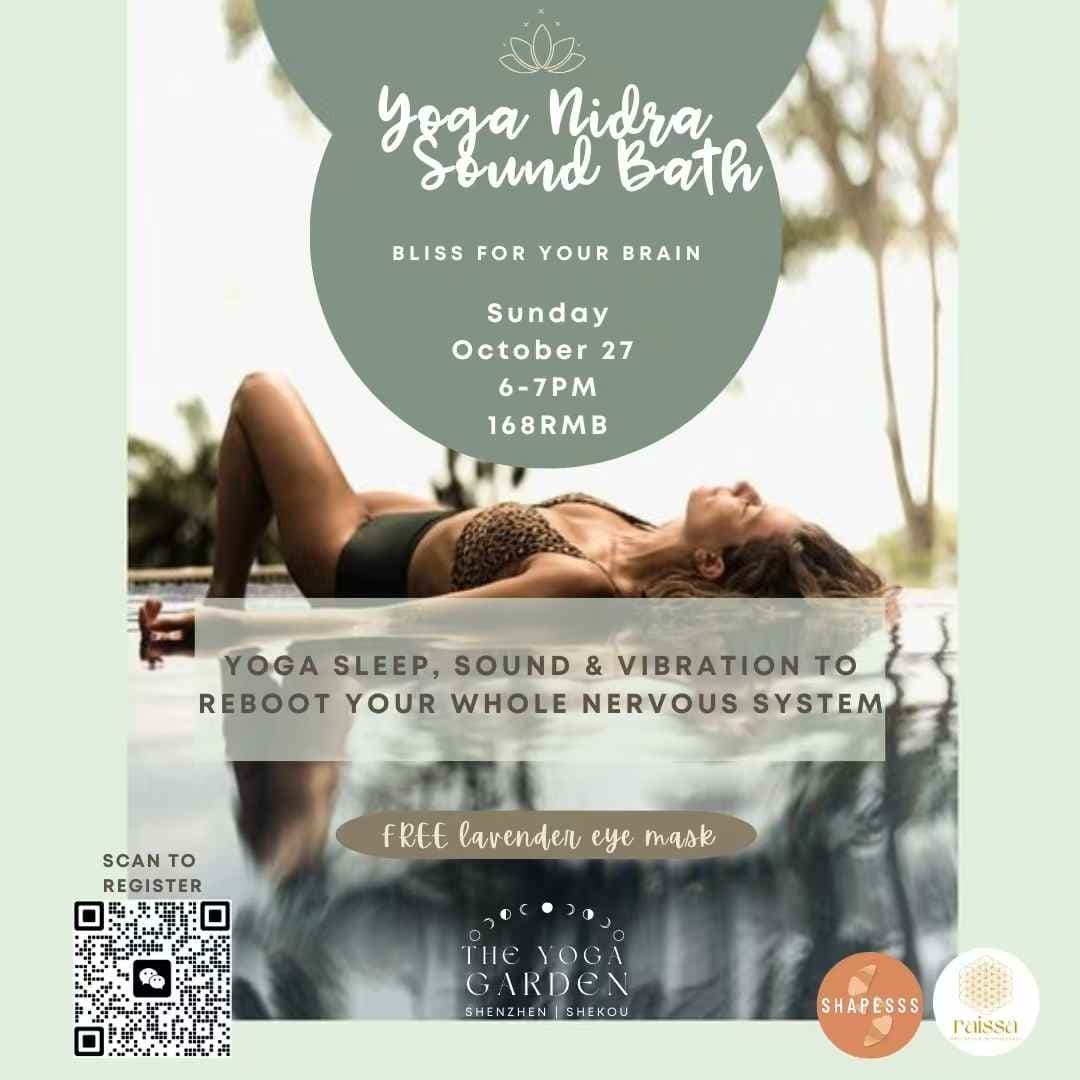
Oct 282:00 AM
Yoga Nidra & Sound Bath
Non-Sleep Deep Rest (NSDR) and a crystal bowl sound bath. Guided yogic sleep for the kind of rest ordinary sleep rarely reaches.
Yoga Nidra FAQ
Ready to try Yoga Nidra?
Book a group session, private experience, or get in touch to learn more.