Yin yoga: the practice of staying
Three to five minutes in a single pose. No movement. No distraction. Just you and whatever surfaces. Here is why yin is the practice most people need and most people avoid.
In most yoga classes, you flow. You move from pose to pose, matching breath to movement, building heat. It is active, rhythmic, and the nervous system stays engaged.
Yin yoga is the opposite. You take a shape. You stay. Three minutes. Five minutes. Sometimes longer. And in that stillness, everything you have been avoiding shows up.
What yin yoga is
Yin yoga targets the deep connective tissue — fascia, ligaments, tendons, joints — that faster styles of movement cannot reach. Poses are held passively, without muscular engagement, for extended periods. The body softens into the shape rather than holding it.
But yin is not really about flexibility. It is about capacity — the capacity to be with discomfort without running from it. The capacity to stay present when the mind starts to fidget, bargain, and plan its escape.
Why it is hard
We are trained to move away from discomfort. Scroll, snack, switch tasks, check the phone. Yin removes all of those exits. There is nothing to do but be with what is here. For many people, this is the most challenging practice in the building — not physically, but psychologically.
And that is exactly why it works.
What happens in the nervous system
The long holds create a slow, sustained signal of safety. The body braces initially — this is unfamiliar — and then, somewhere around the two-minute mark, it begins to release. The parasympathetic system activates. The breath deepens. Emotions that have been stored in the fascia may surface.
This is not damage. It is processing. The body holds what the mind will not feel, and yin creates the conditions for that holding to finally soften.
At The Garden
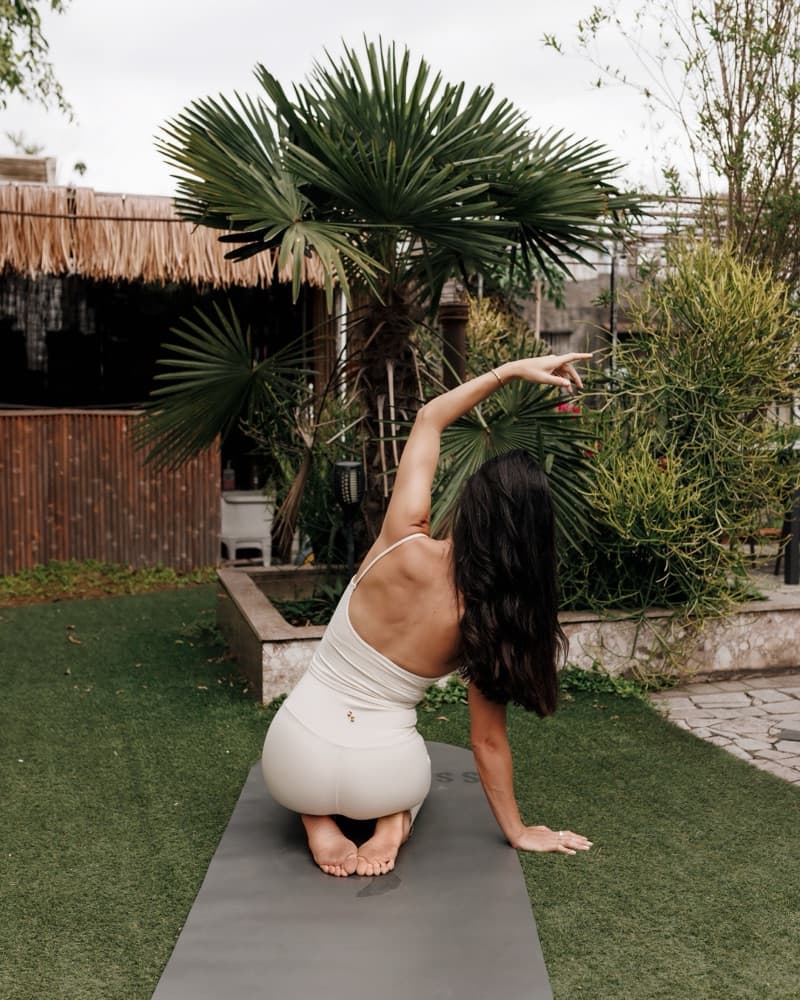
Our yin sessions are held in the rooftop garden, guided with care and minimal instruction. All levels are welcome. Props are encouraged — the point is not to push, but to find the edge where sensation lives and stay there, breathing, until the body decides to let go.
No flexibility required. Just the willingness to stay.
Want to experience this?
Yoga →