What theobromine does that caffeine cannot
The compound in cacao that makes it feel different from coffee — warmer, gentler, and without the crash. Here is the chemistry.
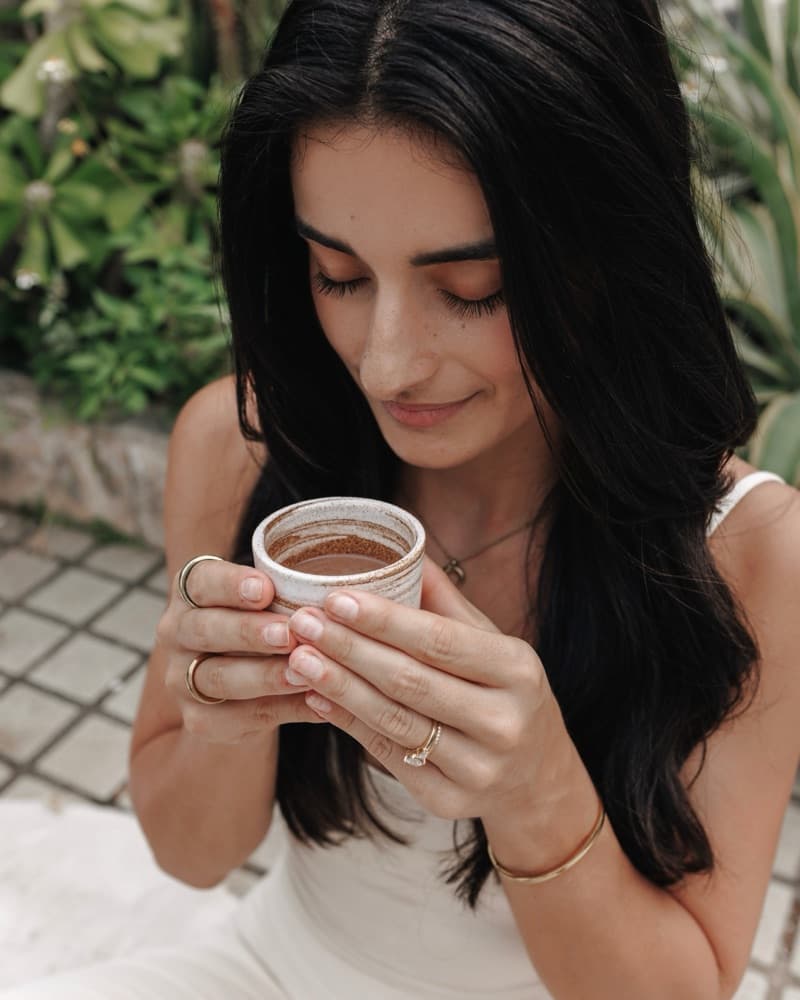
If you have ever drunk ceremonial cacao, you know the feeling. A warmth that spreads from the chest. Sustained, clear energy without the jitter. A gentle openness that lasts for hours and fades without a crash.
That feeling has a name: theobromine.
Theobromine vs caffeine
Both are methylxanthines — stimulants found in plants. But they behave very differently in the body.
Caffeine hits fast and hard. It constricts blood vessels, spikes cortisol, narrows focus, and creates a dependence loop. The half-life is 5–6 hours, which is why an afternoon coffee can sabotage your sleep.
Theobromine is gentler and slower. It is a vasodilator — it opens blood vessels rather than constricting them, increasing blood flow to the heart and brain. The energy it produces is warm, sustained, and calm. There is no cortisol spike, no jitter, and no crash. Its half-life is longer (6–8 hours), but because the stimulation is milder, it does not interfere with sleep the way caffeine does.
Why cacao feels like a heart opener
Increased blood flow to the heart is a physical sensation. Many people describe drinking ceremonial cacao as feeling their chest open — a warmth, a softening, sometimes an emotional tenderness. The "heart-opening" quality of cacao is not just poetry. It is theobromine doing exactly what it does: widening the vessels, increasing flow, and creating the physical conditions for emotional openness.
The daily practice
Many practitioners — Raissa included — drink ceremonial cacao daily, not as ceremony but as a morning practice. A warm cup, a few quiet minutes, a gentle opening before the day begins. It replaces coffee not as a compromise, but as an upgrade — better energy, better mood, and no withdrawal.
Want to experience this?
Cacao Ceremony →